
Dodge Transmission Repair
Ask the professionals at Boise Transmission Repair for all of your Dodge Ram gearbox questions for automatic and standard equipped vehicles, cars, pickup trucks and SUV’s regarding any problems you are having.
Are you searching for ‘Dodge transmission repair near me’?
We specialize in Dodge transmission fluid changes and flushes, call us today for an estimate for your vehicle.
Dodge Transmission Repair Experts
For more information, you can give us a call directly at (208) 297-5202
We service Meridian ID, Nampa ID, Caldwell ID, Mountain Home ID, Kuna ID, Garden City ID, Eagle ID, Star ID, Emmett ID, Homedale ID, Blacks Creek ID, Parma ID, Horseshoe Bend ID, New Plymouth ID, Hidden Springs ID,

Dodge Ram Pickup Truck Transmission Repair Service Boise Idaho
- broken mounts
- transfer case
- axles
- drive-train repair
- undercarriage drive-line protective skid plates installed
- Dodge Ram manual clutch repair and replacement resurfacing of a pressure plate near me.
Every Dodge transmission repair job is backed by a written warranty! Our professional crew of transmission repair technicians have been serving folks from the Boise area for over 30 years. So, if there is any local transmission shop in Boise that you can trust, Boise Transmission Repair is the place.
We know how hard it is to find a transmission repair shop that you can trust. One of the best things you can do for your vehicle is to have it serviced on a regular basis, preventive maintenance is recommended for all transmissions, this is your cheapest insurance that will give you peace of mind when it’s time for that road trip.
Transmission Repair Meridian Idaho
Year models we service: 1956,1957,1958,1959,1960,1961,1962,1963,1964,1965,1966,1967,1968,1969,1970,1971,1972,1973,1974,1975,1976,1978,1979,1980,1981,1982,1983,1984,1985,1986,1987,1988,1989,1990,1991,1992,1993,1994,1995,1996,1997,1998,1999,2000,2001,2002,2003,2004,2005,2006,2007,2008,2009,2010,2011,2012,2013,2014,2015,2016,2017,2018,2019,
Here are some of the Dodge models we work on:Dodge: Ram 1500 Crew Cab, Ram 1500 Quad Cab, Ram 1500 Regular Cab, Ram 2500 Crew Cab, Ram 2500 Mega Cab, Ram 2500 Regular Cab, Ram 3500 Crew Cab, Ram 3500 Mega Cab, Ram 3500 Regular Cab, Ram Dakota Crew Cab, Ram Dakota Extended Cab, avenger, Caliber, Caravan, Challenger, Charger, LX series, Durango, Journey, Nitro, Viper, 100 Commando, 330, 400, 50 series, Aries, Aspen, Dart, Lancer, Neon, Omni, Spirit, Sprinter, Stratus, Town, Country Van, plus more!
Automatic and manual transmission Overhauls and repairs
Factory and Aftermarket
Electrical system repair and enhancement, Transfer case and Differential (front and rear axle) service and repair.
All wheel drive and 4X4 system service and repair including electronic diagnostics and troubleshooting.
Enhancements for Heavy Duty Towing on all types of cars and trucks.
Diesel transmission modifications’ for increased engine horsepower output for those really big jobs.
We can fix your broken transmission mount, drive axle, cv boot joint, Dodge Cummins diesel truck transmission repair service.
DodgeTransmission repair Boise https://goo.gl/maps/6eT2UnNirey .
Transmission service Boise.
DODGE Cummins diesel Truck transmission shift solenoid repair.
Ask us about our ”in-house financing” you may qualify…call today (208) 297-5202
A little history about Dodge:
Dodge is an American brand of cars, minivans, and sport utility vehicles manufactured by FCA US LLC (formerly known as Chrysler Group LLC), based in Auburn Hills, Michigan. Dodge vehicles currently include the lower-priced badge variants of Chrysler-badged vehicles as well as performance cars, though for much of its existence Dodge was Chrysler’s mid-priced brand above Plymouth.
Founded as the Dodge Brothers Company machine shop by brothers Horace Elgin Dodge and John Francis Dodge in the early 1900s,[3] Dodge was originally a supplier of parts and assemblies for Detroit-based automakers and began building complete automobiles under the “Dodge Brothers” brand in 1914, predating the founding of Chrysler Corporation. The factory was located in Hamtramck, Michigan and was called the Dodge Main factory from 1910 until its closing in January 1980. The Dodge brothers both died in 1920, and the company was sold by their families to Dillon, Read & Co. in 1925 before being sold to Chrysler in 1928. Dodge vehicles mainly consisted of trucks and full-sized passenger cars through the 1970s, though it made memorable compact cars (such as the 1963-76 Dart) and midsize cars (such as the “B-Body” Coronet and Charger from 1962-79.
The 1973 oil crisis and its subsequent impact on the American automobile industry led Chrysler to develop the K platform of compact to midsize cars for the 1981 model year. The K platform and its derivatives are credited with reviving Chrysler’s business in the 1980s; one such derivative became the Dodge Caravan.
The Dodge brand has withstood the multiple ownership changes at Chrysler from 1998 to 2009, including its short-lived merger with Daimler-Benz AG from 1998 to 2007, its subsequent sale to Cerberus Capital Management, its 2009 bailout by the United States government, and its subsequent Chapter 11 bankruptcy and acquisition by Fiat.
In 2011, Dodge, Ram, and Dodge’s Viper were separated. Dodge said that the Dodge Viper would be an SRT product and Ram will be a manufacturer. In 2014, SRT was merged back into Dodge. Later that year, Chrysler Group was renamed FCA US LLC, corresponding with the merger of Fiat S.p.A. and Chrysler Group into the single corporate structure of Fiat Chrysler Automobiles.
Founding and early years
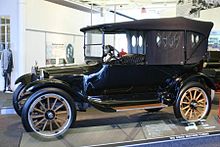
1915 Dodge Brothers Model 30-35 touring car
Dodge Brothers delivery trucks, Salt Lake City, 1920
After the founding of the Dodge Brothers Company by Horace and John Dodge in 1900, the Detroit-based company quickly found work producing precision engine and chassis components for the city’s growing number of automobile firms. Chief among these customers were the established Olds Motor Vehicle Company and the then-new Ford Motor Company.
The first machine shop where the brothers worked together as parts suppliers for Olds and Ford was located at the Boydell Building on Beaubien Street at Lafayette in 1900. The location was replaced by a larger facility at Hastings Street and Monroe Avenue, which is now a parking garage for the Greek town Casino Hotel (Hastings Street at this location has been renamed Chrysler Service Drive). By 1910 the Dodge Main factory was built in Hamtramck, where it remained until 1979.
By 1914, John and Horace had created the new four-cylinder Dodge Model 30. Marketed as a slightly more upscale competitor to the ubiquitous Ford Model T, it pioneered or made standard many features later taken for granted: all-steel body construction (the vast majority of cars worldwide still used wood-framing under steel panels, though Stoneleigh and BSA used steel bodies as early as 1911);[5] 12-volt electrical system (6-volt systems would remain the norm until the 1950s); 35 horsepower[6] (versus the Model T’s 20), and sliding-gear transmission (the best-selling Model T would retain an antiquated planetary design until its demise in 1927). As a result of this, and the brothers’ well-earned reputation for the highest quality truck, transmission and motor parts they made for other successful vehicles, Dodge Brothers cars were ranked at second place for U.S. sales as early as 1916. That same year, Henry Ford decided to stop paying stock dividends to finance the construction of his new River Rouge complex. This led the Dodges to file suit to protect their annual stock earnings of approximately one million dollars, leading Ford to buy out his shareholders; the Dodges were paid some 25 million USD. As the Dodge brothers decided to produce their own vehicle, John Dodge was once quoted as saying, “Someday, people who own a Ford are going to want an automobile”, and introduced their first car in 1914.
Also in 1916, the Dodge Brothers’ vehicles won acclaim for durability while in service with the U.S. Army’s Pancho Villa Expedition into Mexico. One notable instance was in May when the 6th Infantry received a reported sighting of Julio Cárdenas, one of Villa’s most trusted subordinates. Lt. George S. Patton led ten soldiers and two civilian guides in three Dodge Model 30 touring cars to conduct a raid at a ranch house in San Miguelito, Sonora. During the ensuing firefight the party killed three men, of whom one was identified as Cárdenas. Patton’s men tied the bodies to the hoods of the Dodges, returning to headquarters in Dublán and an excited reception from US newspapermen.
Death of the Dodge brothers, Sale to Chrysler

Dodge transmission repair Boise
1927 Dodge Brothers Series 124 sedan
Dodge Brothers cars continued to rank second place in American sales in 1920. However, the same year, tragedy struck as John Dodge was felled by pneumonia in January. His brother Horace then died of cirrhosis in December of the same year (reportedly out of grief at the loss of his brother, to whom he was very close). With the loss of both founders, the Dodge Brothers Company passed into the hands of the brothers’ widows, who promoted long-time employee Frederick Haynes to the company presidency. During this time, the Model 30 was evolved to become the new Series 116 (though it retained the same basic construction and engineering features). However, throughout the 1920’s Dodge gradually lost its ranking as the third best-selling automobile manufacturer, slipping down to seventh in the U.S. market.
Dodge Brothers emerged as a leading builder of light trucks. They also entered into an agreement whereby they marketed trucks built by Graham Brothers of Evansville, Indiana. The three Graham brothers would later produce Graham-Paige and Graham automobiles.
Stagnation in development was becoming apparent, however, and the public responded by dropping Dodge Brothers to fifth place in the industry by 1925. That year, the Dodge Brothers company was sold by the widows to the well-known investment group Dillon, Read & Co. for no less than US$146 million (at the time, the largest cash transaction in history).
Dillon, Read & Co. offered non-voting stock on the market in the new Dodge Brothers, Inc., firm, and along with the sale of bonds was able to raise $160 million, reaping a $14 million (net) profit. All voting stock was retained by Dillon, Read. Frederick Haynes remained as company head until E.G. Wilmer was named board chairman in November, 1926. Wilmer was a banker with no auto experience and Haynes remained as president. Changes to the car, save for superficial things like trim levels and colors, remained minimal until 1927, when the new Senior six-cylinder line was introduced. The former four-cylinder line was kept on, but renamed the Fast Four line until it was dropped in favor of two lighter six-cylinder models (the Standard Six and Victory Six) for 1928.
On October 1, 1925, Dodge Brothers, Inc., acquired a 51% interest in Graham Brothers, Inc., for $13 million and the remaining 49% on May 1, 1926. The three Graham brothers, Robert, Joseph and Ray, assumed management positions in Dodge Brothers before departing early in 1927.
Despite all this, Dodge Brothers’ sales had already dropped to seventh place in the industry by 1927, and Dillon, Read began looking for someone to take over the company on a more permanent basis. Eventually Dodge was sold to Chrysler Corporation in 1928.[14]
Pre-war years

Dodge transmission repair Boise
Dodge aimed for the luxury market in this advertisement for the 1933 models
To fit better in the Chrysler Corporation lineup, alongside low-priced Plymouth and medium-priced DeSoto, Dodge’s lineup for early 1930 was trimmed down to a core group of two lines and thirteen models (from three lines and nineteen models just over a year previous). Prices started out just above DeSoto but were somewhat less than top-of-the-line Chrysler, in a small-scale recreation of General Motors’ “step-up” marketing concept. (DeSoto and Dodge would swap places in the market for the 1933 model year, Dodge dropping down between Plymouth and DeSoto.) As Plymouth cars were sold at Chrysler dealerships, Dodge branded vehicles were sold as a lower cost alternative to DeSoto.
For 1930, Dodge took another step up by adding a new eight-cylinder line to replace the existing Senior six-cylinder. This basic format of a dual line with Six and Eight models continued through 1933, and the cars were gradually streamlined and lengthened in step with prevailing trends of the day. The Dodge Eight was replaced by a larger Dodge DeLuxe Six for 1934, which was dropped for 1935. A long-wheelbase edition of the remaining Six was added for 1936 and would remain a part of the lineup for many years. To enhance production, in 1932 Chrysler built a factory in Los Angeles, California where Chrysler, DeSoto, Dodge and Plymouth vehicles were built until the factory closed in 1971.

Dodge muscle car transmission repair Boise
1939 Dodge Airflow Texaco tanker truck
The Dodge line, along with most of the corporation’s output, was restyled in the so-called “Wind Stream” look for 1935. This was a mild form of streamlining, which saw sales jump remarkably over the previous year (even though Dodge as a whole still dropped to fifth place for the year after two years of holding down fourth). Dodge never got the radical Airflow styling that was the cause of depressed sales of Chryslers and DeSotos from 1934 to 1937, as a passenger sedan, but it was used on commercial truck for a short time.

Dodge ram pickup truck transmission repair Boise
Dodge D11 Luxury Liner 4-Door Sedan 1939
Dodge (along with the rest of Chrysler) added safety features such as a smooth, flat dashboard with no protruding knobs, curved in door handles, and padded front-seat backs for the benefit of the rear-seat occupants.
Another major restyle arrived for the 25th-anniversary 1939 models, which Dodge dubbed the Luxury Liner series. These were once again completely redesigned, with new bodies for 1940, again in 1941, and a refreshing for 1942. However, just after the 1942 models were introduced, Japan’s attack on Pearl Harbor forced the shutdown of Dodge’s passenger car assembly lines in favor of war production in February 1942. 1941 saw the introduction of Fluid Drive for Dodge cars, which eliminated stalling or bucking if the clutch were released too quickly. This feature put a fluid coupling in between the engine and the clutch, although the driver still had to shift gears manually.
World War II
Chrysler was prolific in its production of war materiel from 1942 to 1945, and Dodge in particular was well known to both average citizens and thankful soldiers for their tough military-spec truck models and ambulances like the WC54. Starting with the hastily converted VC series and evolving into the celebrated WC series, Dodge built a strong reputation for itself that readily carried over into civilian models after the war.
Post-war years

Dodge Caravan transmission repair service
1946 Dodge Custom 4-door sedan

Dodge Durango transmission experts
1956 Dodge Coronet

Dodge Grand Caravan transmission repair service
1946 Dodge FK6 bus operated by Egged in the 1940s
Civilian production at Dodge was restarted by late 1945, in time for the 1946 model year. The “seller’s market” of the early postwar years, brought on by the lack of any new cars throughout the war, meant that every automaker found it easy to sell vehicles regardless of any drawbacks they might have. Like almost every other automaker, Dodge sold lightly facelifted revisions of its 1942 design through the 1948 season. As before, these were a single series of six-cylinder models with two trim levels (basic Deluxe or plusher Custom). From 1949 until 1954, Fluid Drive could be combined with “Gyro-Matic,” a semi-automatic transmission that reduced (but didn’t eliminate) the need to shift gears.
Styling was not initially Dodge’s strong point during this period, though that began to change by 1953 under the direction of corporate design chief Virgil Exner. At the same time, Dodge also introduced its first V8 engine – the Red Ram Hemi, a smaller version of the original design of the famed Hemi. The new 1953 bodies were smaller and based on the Plymouth. For 1954, sales dropped, the stubby styling not going over well with the public. 1954 also saw the introduction of the fully automatic PowerFlite transmission.
Chrysler borrowed $250 million from Prudential in 1954 to finance expansion, acquisition and updating the outdated styling of their car lines that was contributed to Chrysler failing to benefit from the postwar boom as GM and Ford were.
Exner led the creation of the new corporate “Forward Look” styling of 1955, beginning a new era for Dodge. With steadily upgraded styling and ever-stronger engines every year through 1960, Dodge found a ready market for its products as America discovered the joys of freeway travel. This situation improved when Dodge introduced a new line of Dodges called the Dart to do battle against Ford, Chevrolet and Plymouth. The result was that Dodge sales in the middle price class collapsed. Special and regional models were sold as well, including the LaFemme (a white and orchid-trimmed hardtop marketed toward women) and the Texan, a gold-accented Dodge sold in the Lone Star State.
Dodge Avenger transmission repair service Boise
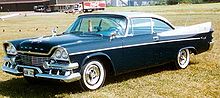
1958 Dodge Coronet Lancer hardtop coupe
1957 saw the introduction of a new automatic transmission, three-speed TorqueFlite. Both PowerFlite and TorqueFlite were controlled by mechanical push-buttons until 1965.
Dodge entered the compact car field for 1961 with their new Lancer, a variation on Plymouth’s Valiant. Though it was not initially successful, the Dart range that succeeded the Lancer in 1963 would prove to be one of the division’s top sellers for many years.
Chrysler did make an ill-advised move to downsize the Dodge and Plymouth full-size lines for 1962, which resulted in a loss of sales. However, they turned this around in 1965 by turning those former full-sizes into “new” mid-size models; Dodge revived the Coronet nameplate in this way and later added a sporty fastback version called the Charger that became both a sales leader and a winner on the NASCAR circuit. Not only did this style dominate the racetrack for 4 full years, its aerodynamic improvements forever changed the face of NASCAR racing.
Full-size models evolved gradually during this time. After Dodge dealers complained about not having a true full-size car in the fall of 1961, the Custom 880 was hurried into production. The Custom 880 used the 1962 Chrysler Newport body with the 1961 Dodge front end and interior. The 880 continued into 1965, the year a completely new full-size body was put into production, the Polara entered the medium price class and Monaco was added as the top series. The Polara and Monaco were changed mostly in appearance for the next ten years or so. Unique “fuselage” styling was employed for 1969 through 1973 and then was toned down again for the 1974 to 1977 models.

Dodge Dakota transmission repair Boise
1967 Dodge Coronet 440 sedan
Dodge is well-known today for being a player in the muscle car market of the late 1960s and early 1970s.